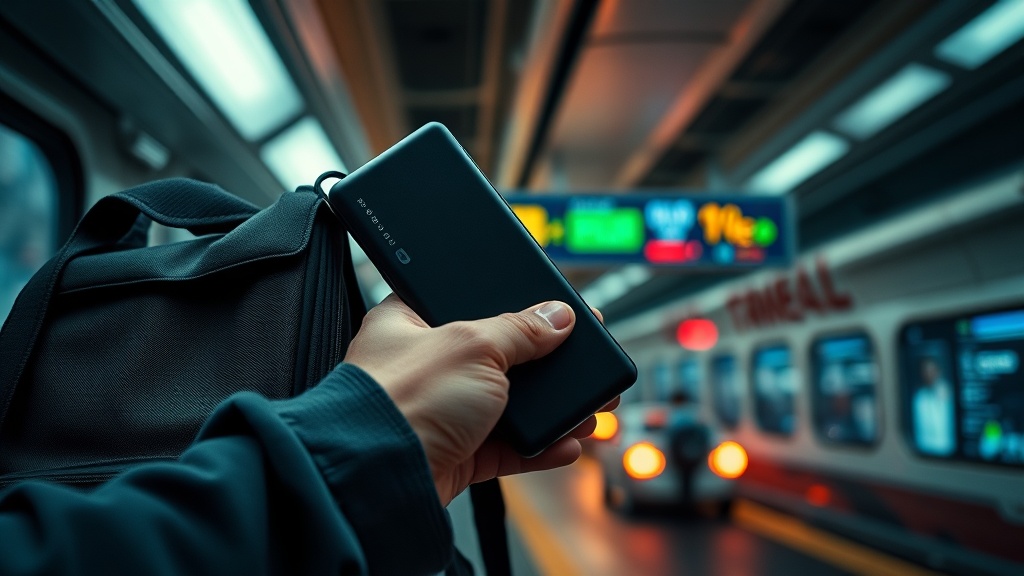
Carry a Portable Power Bank for Long Transit Days

Quick Tip
Always carry a high-capacity portable charger to ensure your GPS and camera never run out of juice during transit.
Did you know that a single dead smartphone can effectively strand a traveler in an unfamiliar city? This post covers why a portable power bank is a non-negotiable item for your transit days and how to choose the right one. Relying on airport or train station outlets is a gamble—they're often broken or occupied.
Why Do I Need a Portable Power Bank for Travel?
A portable power bank ensures your navigation, boarding passes, and digital tickets remain accessible even when you can't find an outlet. It's about more than just checking social media; it's about safety and staying connected during long layovers or delayed flights.
If you're practicing light travel techniques, a power bank is actually a space-saving win. Instead of carrying bulky cables and hunting for wall plugs, you just carry one compact device. (Trust me, I learned this the hard way in a London subway station last year.)
"A dead phone during transit isn't just an inconvenience; it's a logistical failure."
What Is the Best Capacity for a Flight?
The best capacity for a flight is typically between 10,000mAh and 20,000mAh. This range provides enough juice to charge a standard smartphone several times without being too heavy or violating airline regulations.
It's important to check the lithium-ion battery regulations set by the FAA or your local aviation authority. Most airlines require these to be in your carry-on luggage, never in your checked bags, because of fire safety protocols.
| Capacity (mAh) | Best For... | Weight Factor |
|---|---|---|
| 5,000 | Quick emergency top-offs | Ultra-light |
| 10,000 | Standard day trips/short flights | Lightweight |
| 20,000 | Long-haul transit/multiple devices | Heavier |
Which Brands Should I Buy?
Reliable brands like Anker or Baseus offer the best balance of durability and charging speed. You don't want a cheap, unbranded battery that might overheat or fail when you're halfway through a cross-country trip.
When shopping, look for these specific features:
- USB-C Fast Charging: Most modern phones require this for speed.
- Multiple Ports: So you can charge your phone and headphones at once.
- Compact Form Factor: It shouldn't take up half your backpack.
The catch? Higher capacity often means more weight. If you're trying to pack a lightweight carry-on, stick to a 10,000mAh model. It's the sweet spot for weight versus utility.